

What Is a Merchant of Record? A Guide for Sports Cappers
Selling sports picks online? Learn what a merchant of record is, how it differs from a payment processor, and what cappers should ask before choosing one.
Benjamin Harris
· 6 min read
By the KeepPicks team. Published October 2026.
A merchant of record (MoR) is the business that is legally the seller in a transaction. It collects the buyer's payment, appears on their card statement, and is responsible for the sale, including refunds and disputes. If you sell sports picks online, understanding the difference between a merchant of record and a plain payment processor can save you a lot of setup work and a few unpleasant surprises.
This guide explains what a merchant of record does, how it compares with a payment processor, and what to ask before you choose one. If you're still working out the basics of selling picks, start with our guide on how to sell sports picks online.
What does a merchant of record do?
When a buyer pays for a subscription to your picks, someone has to be the official seller. That seller needs permission from the card networks to take payments, has to answer if a buyer disputes a charge, and carries the compliance responsibilities that come with the sale.
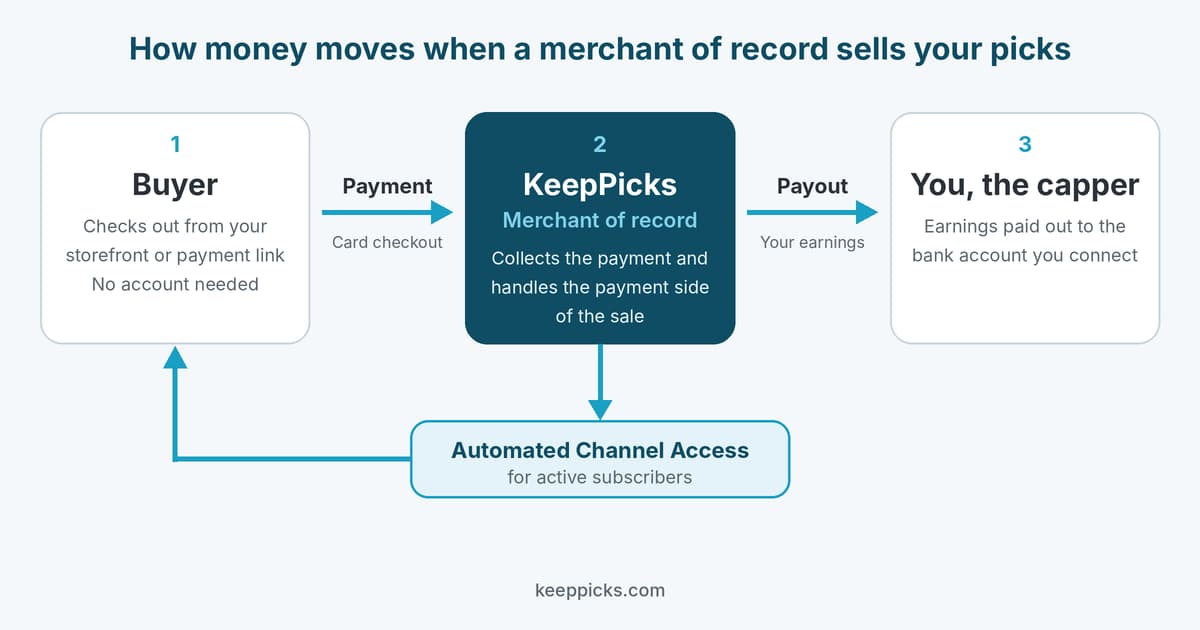
With a merchant of record, that seller is the MoR, not you. The buyer pays through the MoR, the MoR handles the payment side of the sale, and you receive your earnings as a payout. Exactly what a provider covers differs from one company to the next, so always check what is included.
Merchant of record vs. payment processor for sports picks
These two get mixed up all the time, but they do different jobs.
| Payment processor | Merchant of record | |
|---|---|---|
| What it does | Moves money between the buyer's card and your bank | Acts as the legal seller of the transaction |
| Who the buyer is paying | You | The merchant of record |
| Disputes and refunds | Usually your responsibility | Usually handled by the MoR, depending on the provider |
| Setup | Often needs your own merchant account and approval | Uses the MoR's existing setup |
| Good for | Businesses that want full control of payments | Creators who want to sell without building payment infrastructure |
Neither is better in every case. A processor gives you more control, and a merchant of record gives you less to build and manage.
Why sports cappers use a merchant of record
Selling sports betting picks is a different business from selling an ebook, and that affects how payments work.
- Betting-related businesses can face stricter rules. Some payment providers limit or restrict them, and terms vary, so read the policy of any processor before you build on it. Cappers searching for a sports betting payment processor or high risk payment processing often run into this first.
- Setting up your own merchant account takes time. Applications, approvals and paperwork can slow down a capper who just wants to start selling.
- You'd rather spend time on picks. Handling refund requests, disputes and billing questions yourself pulls attention away from the work buyers actually pay for.
- Subscriptions add complexity. Renewals, cancellations and failed payments need constant management when you run a recurring picks business.
None of this means you can't use a processor. It means you should know what you're taking on if you do.
What to ask before you choose a merchant of record
Not every provider is the same. Before you commit, get clear answers to these:
- Do you work with sports betting content? Don't assume. Ask directly.
- What are the total fees, and what is included in them?
- How and when do I get paid? Ask about payout timing and any holds.
- Who handles refunds and disputes?
- Can buyers cancel easily? A confusing cancellation process leads to disputes.
- What does my buyer have to do to check out? Fewer steps means fewer lost sales.
- How is buyer data handled? Look for a clear privacy policy.
- Can I reach a real person when something goes wrong?
How KeepPicks works as a merchant of record
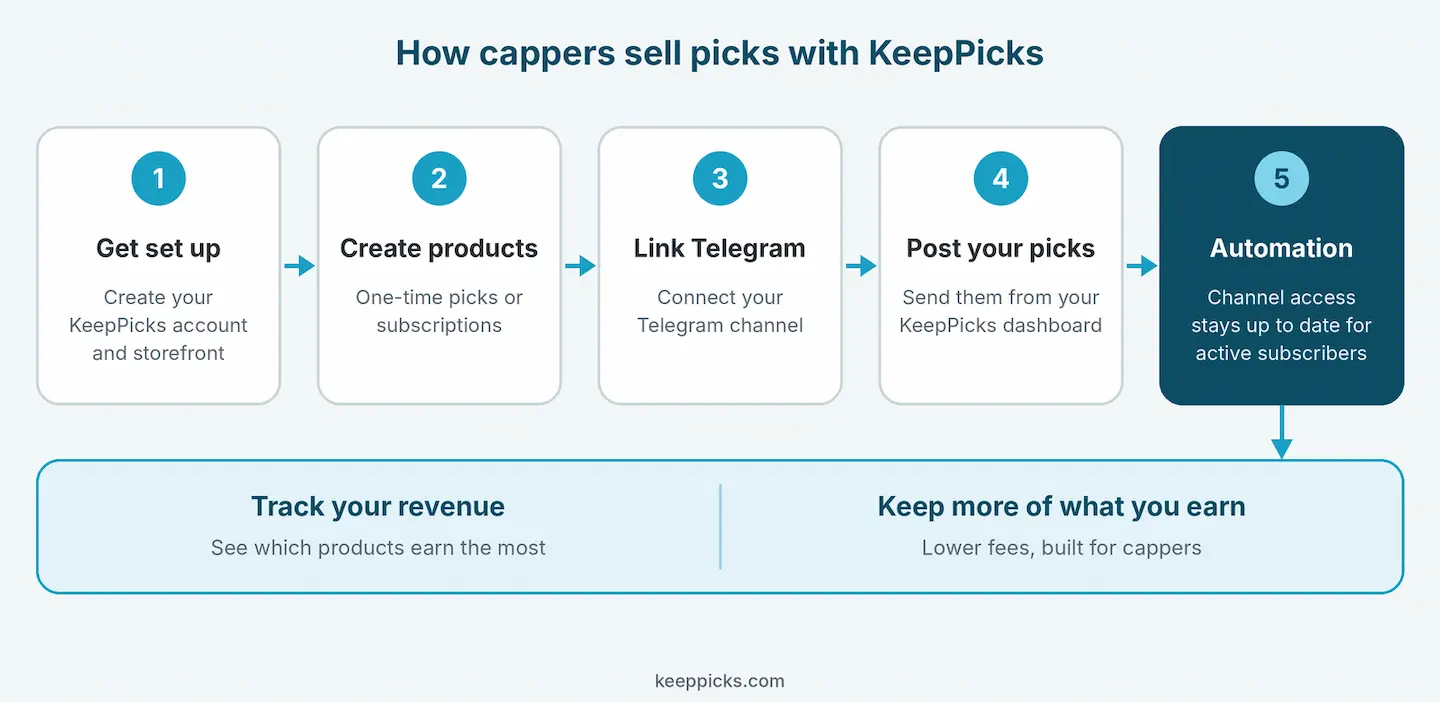
KeepPicks is built as a merchant of record for sports cappers. Buyers pay through your KeepPicks storefront, and your earnings are paid out to the bank account you connect. Here is what that looks like in practice:
- A branded storefront where buyers find your plans
- Pricing plans you set yourself, including weekly, monthly and one-time access
- Payment links you can share anywhere
- Telegram delivery that follows each subscriber's plan, with automatic monitoring to protect your content from leaks
- Sales and customer tracking in one dashboard
- A dedicated account manager you can reach directly
Buyers don't need an account. They check out from your storefront or payment link, and that removes one of the most common reasons a buyer abandons a purchase. KeepPicks keeps buyer data private, and our Privacy Policy explains how it is handled. Subscribers can also manage or cancel their purchases whenever they like.
Want to see how it fits your business? You can learn more about KeepPicks or create your free account.
Do you need a merchant of record?
It depends on how you sell.
- You probably don't need one if you sell a handful of picks through direct messages and handle payments by hand. It's small enough to manage yourself.
- You'll likely benefit from one if you run subscriptions, sell to many buyers, or deliver through Telegram, because the payment and access work grows quickly.
If you're unsure, start by listing what you'd have to handle yourself: payments, refunds, disputes, cancellations and payouts. If that list looks like a second job, a merchant of record is worth a look.
Frequently asked questions
What is a merchant of record in simple terms?
It's the business that legally sells the product to the buyer. The buyer pays the merchant of record, and the merchant of record passes your earnings on to you.
Is a merchant of record the same as a payment processor?
No. A payment processor moves money. A merchant of record is also the legal seller, so it usually takes on more of the responsibility for the sale.
Do sports cappers need a merchant of record?
Not always. It helps most when you run subscriptions or sell to many buyers, and when you'd rather not set up and manage payments yourself.
Is it legal to sell sports picks?
Rules about betting advice and gambling-related businesses vary by state and country. Check the laws where you live and where your buyers are, and talk to a lawyer if you're unsure.
Do my buyers need a KeepPicks account?
No. Buyers can check out from your storefront or payment link without creating an account.
Can I get help setting up?
Yes. Contact our team, and your account manager can help once you're set up.
Ready to sell your picks?
A merchant of record takes the payment side off your plate so you can focus on your picks. Create your free KeepPicks account, or read our full guide on how to sell sports picks online to plan your next steps.
This article is general information, not legal or tax advice. Sports betting involves risk, and picks are opinions, not guarantees. You must be of legal betting age where you live.